A Monkey, a Bird and a Story
- Series: Evolution’s Mistakes, History, Philosophy, Transcript English

In the years 1962 and 1963, public school prayer and Bible reading were “outlawed” in the United States. These were controversial r...
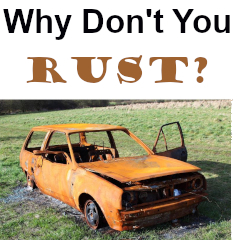
Did you ever wonder why you don’t rust? Before you laugh, remember – iron is not only a major part of your blood, it is used to attract the oxygen that is carried by your blood to the rest of your body. And you know what happens when oxygen meets the iron in your car or a tool that is left outside overnight – rust! So, why don’t we rust?
Click Here to Learn More!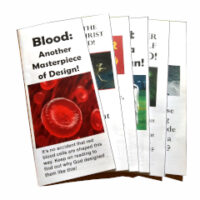
Send the gospel home with each church visitor. Simply insert a FREE copy of a Creation Moments Gospel Tract inside the bulletin or pew. You can also give one to every visitor as they leave your service. Later, as the Holy Spirit keeps knocking at the door of their hearts, they can read what to do, and what to pray.
Learn MorePublic school textbooks on Biology, Earth sciences, and Human society generally well-present the facts; it is the interpretation of those facts that is currently under fire and of concern. Without exception, the interpretation is from the evolutionary perspective and serves to colour the very words that are used in the text.
Click here to read, share and/or print the article.
God's Word can be trusted on every matter it addresses – whether it be science, history, prophecy or anything else - including life and death! The Bible’s own words guide us in thinking about the most important question anyone can ever ask: “How can I be saved?”
The Gospel in Blood